
INTRODUCTION
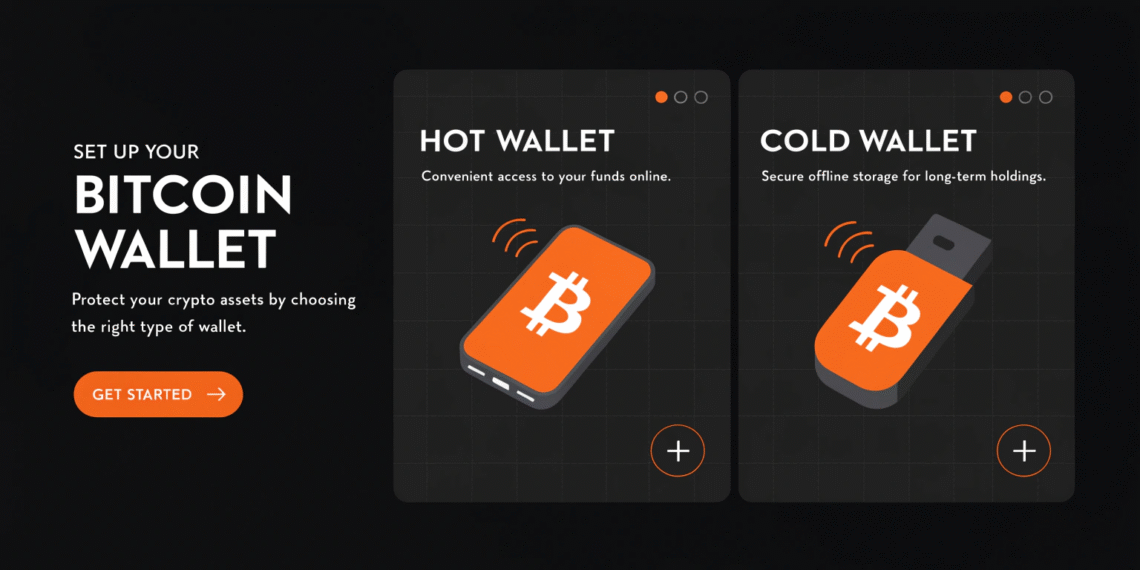
Securing your Bitcoin Wallet Setup Guide begins with choosing the right wallet. A Bitcoin wallet stores your private keys, allowing you to send, receive, and manage BTC. For beginners, understanding the difference between hot wallets (online) and cold wallets (offline) is critical for safety and convenience.
From personal experience helping new investors, I’ve seen many beginners lose access to Bitcoin due to improper wallet setup or lack of backups. In this guide, we’ll break down hot vs cold wallets, provide step-by-step setup instructions, and share practical security tips to protect your Bitcoin holdings in 2025.
By the end, you’ll know which wallet suits your needs, how to set it up correctly, and how to keep your BTC safe from theft or loss.
What Is a Bitcoin Wallet?
A Bitcoin wallet doesn’t store Bitcoin itself — the coins exist on the blockchain. Instead, wallets store private keys, which grant access to your BTC. Key functions include:
Sending and receiving Bitcoin
Checking balances
Managing multiple addresses
Securing private keys
Pro Tip: Always back up your wallet and keep recovery phrases secure.
Hot Wallets — Convenience with Online Access
What Are Hot Wallets?
Hot wallets are connected to the internet, making them ideal for quick transactions. Examples include:
Mobile wallets (Ex: Trust Wallet, MetaMask)
Web wallets (Ex: Coinbase Wallet, Blockchain.com Wallet)
Desktop wallets (Ex: Electrum, Exodus)
Pros:
Easy to set up
Convenient for daily use and trading
Accessible from multiple devices
Cons:
Vulnerable to hacking and phishing attacks
Less secure for large amounts of BTC
How to Set Up a Hot Wallet
Step 1: Download the official wallet app from a trusted source
Step 2: Create a new wallet and set a strong password
Step 3: Backup your recovery phrase (write it down offline)
Step 4: Enable two-factor authentication (2FA)
Step 5: Send a small amount of BTC to test the wallet
Tip: Never share your recovery phrase — it grants full access to your funds.
Cold Wallets — Security First, Offline Storage
What Are Cold Wallets?
Cold wallets are offline devices that store your private keys without internet connectivity, making them extremely secure. Examples:
Hardware wallets (Ledger, Trezor)
Paper wallets (printed private keys)
Pros:
High security against hacks and malware
Ideal for long-term storage of large BTC holdings
Cons:
Less convenient for frequent transactions
Initial setup requires careful handling
How to Set Up a Hardware Wallet
Step 1: Purchase a wallet from the official manufacturer
Step 2: Connect the device and follow on-screen setup
Step 3: Generate a new wallet and secure your recovery seed
Step 4: Transfer BTC from your exchange or hot wallet
Step 5: Test with a small transaction to confirm functionality
Investor Insight: Hardware wallets are the gold standard for security, especially for long-term Bitcoin holders.
Hot vs Cold Wallets — Which Should You Choose?
| Feature | Hot Wallet | Cold Wallet |
| Internet Connection | Yes | No |
| Security | Moderate | High |
| Convenience | High | Moderate-Low |
| Ideal Use | Daily transactions | Long-term storage |
| Risk | Hacking, phishing | Loss of device/seed |
Strategy: Use both — a hot wallet for spending and trading, and a cold wallet for long-term storage of significant holdings.
Security Best Practices for Bitcoin Wallets
Backup recovery phrases in multiple secure locations
Never share private keys or recovery seeds online
Enable two-factor authentication (2FA)
Keep software and firmware updated
Avoid public Wi-Fi for transactions
Common Mistake: Storing all BTC in a hot wallet without a cold storage backup — this exposes you to unnecessary risk.
FAQs
Q1: What is the difference between hot and cold wallets?
A: Hot wallets are online and convenient but less secure, while cold wallets are offline, highly secure, and suitable for long-term storage.
Q2: Can I recover my Bitcoin if I lose my wallet?
A: Yes, if you have securely backed up your recovery phrase or private keys.
Q3: Which wallet type is best for beginners?
A: Start with a hot wallet for ease of use, but use a cold wallet for significant BTC holdings.
Q4: Are hardware wallets safe from hacking?
A: Yes, they are offline and highly secure, but physical loss of the device or recovery phrase poses a risk.
Q5: Can I use multiple wallets?
A: Yes, using multiple wallets (hot + cold) is recommended for both convenience and security.
Q6: How do I safely store my recovery phrase?
A: Write it on paper, store in secure locations, and avoid digital copies to prevent hacks.
Internal Links
Bitcoin for Beginners: How to Buy, Store & Use BTC in 2025
Best Altcoins for Long-Term Investment in 2025
Tokenomics Explained for Beginners
External Links