
INTRODUCTION
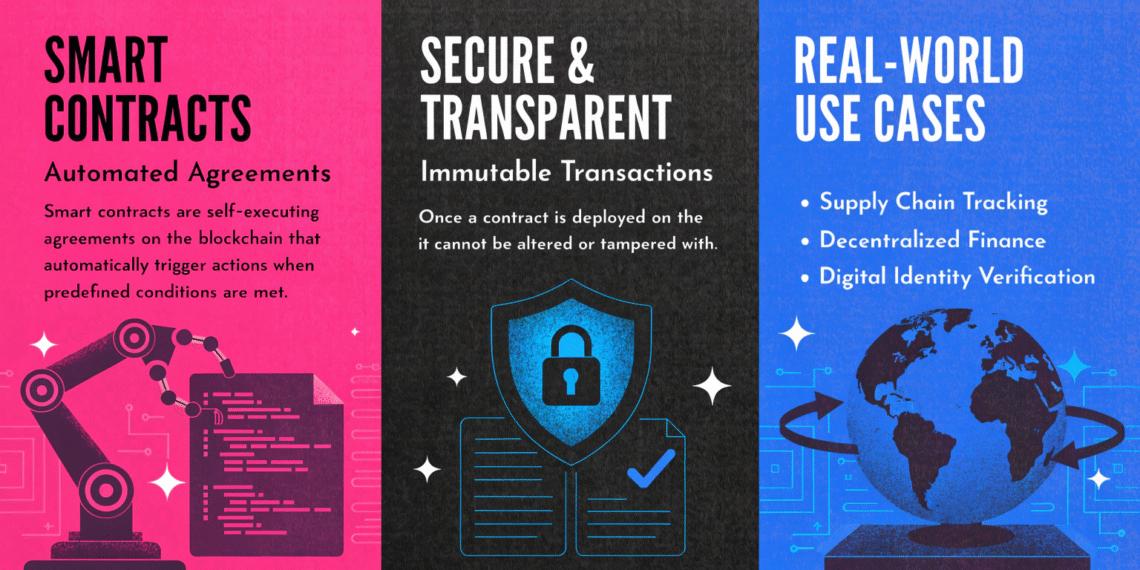
Smart contracts Explained are self-executing programs on the blockchain that automatically enforce agreements without intermediaries. They are a cornerstone of DeFi, Web3, and blockchain automation, enabling secure, transparent, and efficient transactions.
From my experience working with blockchain developers, smart contracts can streamline complex processes, reduce costs, and minimize human error. However, understanding their mechanics, security implications, and practical use cases is critical before deploying or interacting with them.
In this guide, we’ll explain how smart contracts work, explore their security features, provide examples of real-world applications, and discuss best practices for using them safely in 2025. By the end, you’ll understand why smart contracts are revolutionizing business and finance.
What Are Smart Contracts?
A smart contract is a program stored on the blockchain that automatically executes predefined actions when certain conditions are met.
Key characteristics:
Self-executing: Runs automatically without human intervention
Immutable: Once deployed, the code cannot be changed
Transparent: All parties can verify the contract on the blockchain
Trustless: No need for intermediaries like banks or lawyers
Investor Insight: Smart contracts reduce operational costs while increasing trust and efficiency.
How Smart Contracts Work
1. Coding the Contract
Written in blockchain programming languages like Solidity (Ethereum) or Rust (Solana)
Defines conditions, inputs, outputs, and actions
2. Deployment on Blockchain
Uploaded to a blockchain network
Assigned a unique address for interaction
3. Triggering Execution
Executes automatically when conditions are met
Examples: Payment release, token transfer, or access granting
Mini-case study: A DeFi lending platform releases funds automatically once collateral is verified, reducing delays and manual intervention.
Security Features of Smart Contracts
Immutable Code: Once deployed, the contract cannot be altered
Cryptography: Ensures data integrity and verification
Decentralization: Executes across blockchain nodes, reducing manipulation risk
Audits: Third-party security audits help detect vulnerabilities before deployment
Pro Tip: Always use audited contracts and test on testnets before mainnet deployment.
Advantages of Smart Contracts
Automation reduces human error
Increased efficiency and speed
Lower transaction costs
Enhanced transparency and trust
Enables decentralized applications (dApps)
Investor Insight: Smart contracts form the backbone of DeFi, tokenized assets, and supply chain blockchain solutions.
Real-World Applications in 2025
1. Decentralized Finance (DeFi)
Lending, borrowing, and staking executed automatically
Reduces reliance on banks and intermediaries
2. Supply Chain Management
Track products from origin to delivery
Trigger payments automatically upon delivery confirmation
3. Insurance
Smart contracts can automatically process claims when conditions are met
Reduces fraud and accelerates payout times
4. Real Estate & Tokenization
Property ownership can be tokenized and traded on blockchain
Contracts automatically transfer ownership when conditions are met
5. Gaming & NFTs
In-game assets or NFTs can be transferred automatically
Ensures transparent ownership and royalties
Common Challenges & Risks
Coding errors can lead to loss of funds (smart contract bugs)
Immutable code makes mistakes permanent
Complex contracts can be difficult to audit fully
Regulatory uncertainty in some jurisdictions
Tip: Start with simple contracts, conduct audits, and use reputable platforms for deployment.
Best Practices for Using Smart Contracts
Test thoroughly on a testnet before mainnet deployment
Use standardized, audited contract templates
Keep contracts as simple as possible
Monitor contract interactions regularly
Stay informed about blockchain updates and security patches
FAQs (Schema-Ready)
Q1: What is a smart contract?
A: A smart contract is a self-executing program on the blockchain that automatically enforces rules and agreements.
Q2: How do smart contracts execute?
A: They execute automatically when predefined conditions are met, without the need for intermediaries.
Q3: Are smart contracts secure?
A: They are secure if properly coded and audited, but bugs or vulnerabilities can lead to loss of funds.
Q4: What are common use cases?
A: DeFi, supply chain, insurance, real estate tokenization, and NFTs.
Q5: Can I modify a smart contract once deployed?
A: No, smart contracts are immutable; any changes require redeployment.
Q6: Which blockchain platforms support smart contracts?
A: Ethereum, Solana, Cardano, Polkadot, and Binance Smart Chain, among others.
Internal Links
Blockchain Technology Explained: How It Works & Key Use Cases in 2025
DeFi Explained: Opportunities & Risks in 2025
Web3 & Decentralization: The Future of the Internet
Ethereum Smart Contract Overview