
Introduction
Blockchain Use Cases 2025 are transforming industries worldwide by providing secure, transparent, and efficient solutions. From finance and supply chain management to healthcare, energy, governance, and digital assets, blockchain is no longer just a concept—it is actively solving real-world problems. Businesses adopting blockchain in 2025 are seeing faster transactions, reduced fraud, and increased trust among stakeholders.
In this guide, we’ll explore practical blockchain use cases, explain how they work, provide examples, and highlight the benefits and challenges of each application. Whether you’re a business leader, developer, or investor, understanding these real-world implementations will give you a clear view of blockchain’s transformative potential.
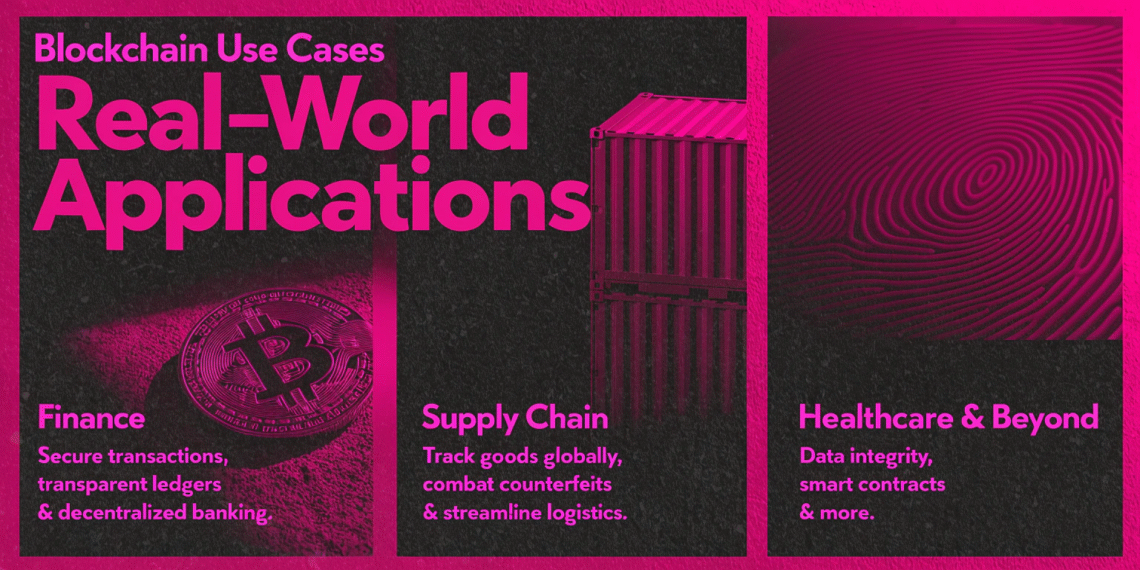
Blockchain Use Cases 2025 in Finance
- Payments & Remittances
Blockchain enables fast, low-cost cross-border payments
Reduces reliance on banks and traditional payment networks
Example: Ripple (XRP) facilitates near-instant international transfers
- Decentralized Finance (DeFi)
Lending, borrowing, yield farming, and staking without intermediaries
Smart contracts automate agreements securely
Example: Aave and Compound platforms
- Asset Tokenization
Real-world assets (real estate, stocks, commodities) can be tokenized and traded on blockchain
Increases liquidity and market access
Example: Tokenized real estate platforms in Europe and Asia
Blockchain Use Cases 2025 in Supply Chain Management
- Product Traceability
Track products from origin to consumer
Improves quality control and prevents fraud
Example: Walmart uses blockchain to track produce, reducing recall time
- Smart Contracts for Automated Payments
Payments are automatically triggered when delivery milestones are met
Reduces administrative overhead and disputes
- Counterfeit Prevention
Verify authenticity of luxury goods, pharmaceuticals, or electronics
Blockchain ensures product data cannot be altered
Blockchain in Healthcare
Secure patient data storage and sharing
Track pharmaceuticals from manufacturer to pharmacy
Example: MediLedger tracks drug supply chains to prevent counterfeit drugs
Enables telemedicine and automated insurance claim processing
Blockchain in Governance & Voting
Transparent, tamper-proof voting systems
Reduces fraud and increases public trust
Example: Estonia’s e-Residency and digital voting systems
Smart contracts enforce election rules automatically
Blockchain in Energy & Sustainability
Peer-to-peer energy trading platforms
Track renewable energy certificates
Example: Power Ledger enables households to trade excess solar energy
Enhances transparency and reduces energy fraud
Blockchain in NFTs & Digital Assets
Ownership verification and transfer of digital art, collectibles, and in-game items
Smart contracts ensure royalties and automatic payments to creators
Example: OpenSea and Rarible marketplaces
Advantages of Blockchain Use Cases
Transparency: Immutable ledger visible to all participants
Security: Cryptography and decentralization reduce fraud
Efficiency: Automates processes and reduces intermediaries
Cost Savings: Fewer middlemen and faster transactions
Innovation: Enables new business models (DeFi, tokenization, NFTs)
Investor Insight: Companies leveraging blockchain can gain competitive advantage by reducing costs and improving trust.
Challenges to Adoption
Regulatory uncertainty in finance, healthcare, and supply chains
Scalability and high transaction fees in some public blockchains
Integration with legacy systems
Security risks if smart contracts are improperly coded
Tip: Businesses should start with pilot programs, use audited solutions, and gradually scale blockchain adoption.
FAQs
Q1: What industries are using blockchain in 2025?
A: Finance, supply chain, healthcare, governance, energy, gaming, and digital assets are major blockchain adopters.
Q2: How does blockchain improve supply chain management?
A: It enables product traceability, authenticity verification, and automated payments via smart contracts.
Q3: Are blockchain applications secure?
A: Yes, if properly implemented with cryptography, audits, and best practices.
Q4: Can blockchain reduce costs?
A: Yes, by eliminating intermediaries and automating processes.
Q5: What are some challenges of blockchain adoption?
A: Scalability, regulatory compliance, security vulnerabilities, and legacy system integration.
Q6: How are NFTs powered by blockchain?
A: Blockchain verifies ownership, tracks transactions, and enforces royalties automatically.
Internal Links
Blockchain Technology Explained: How It Works & Key Use Cases in 2025
Smart Contracts Explained: Automation, Security & Real-World Applications
DeFi Explained: Opportunities & Risks in 2025
External Links
IBM Blockchain Solutions
Walmart Blockchain Case Study
Investopedia: Blockchain Use Cases